
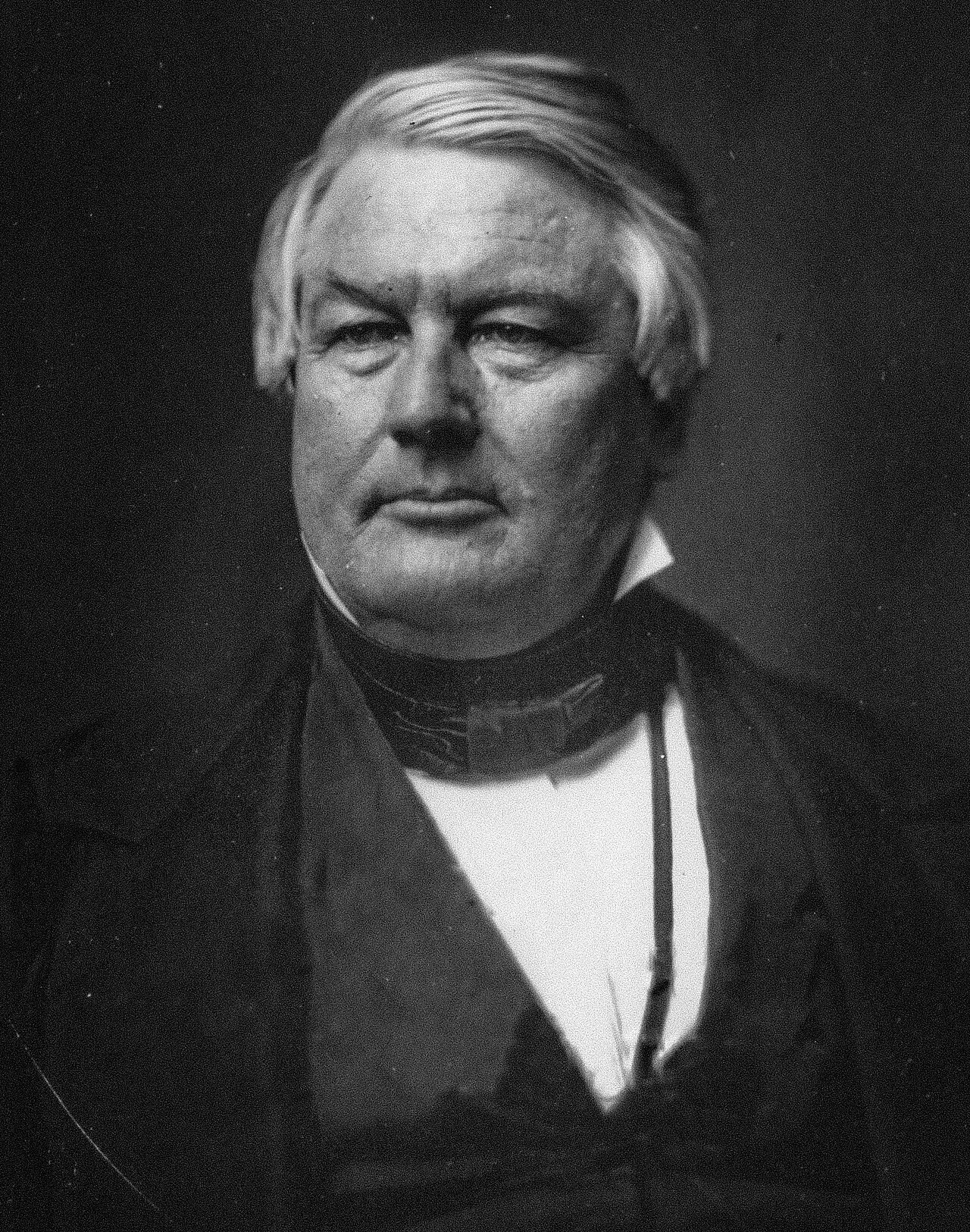
Millard Fillmore
13th U.S.

via Wikipedia: John Phillips (pirate) · see source
- field
- Politics, Law
- nationality
- American
Lore & Background
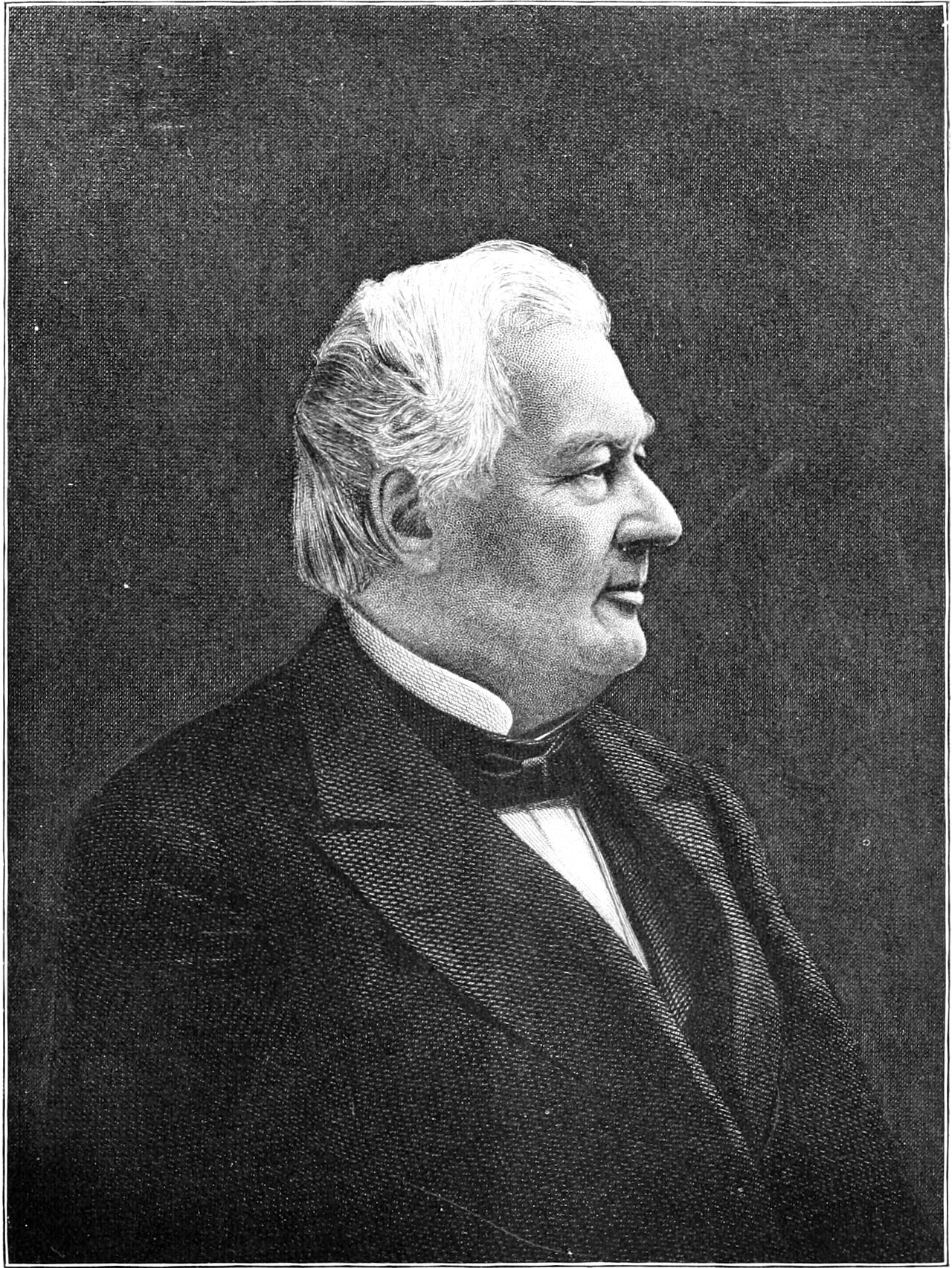
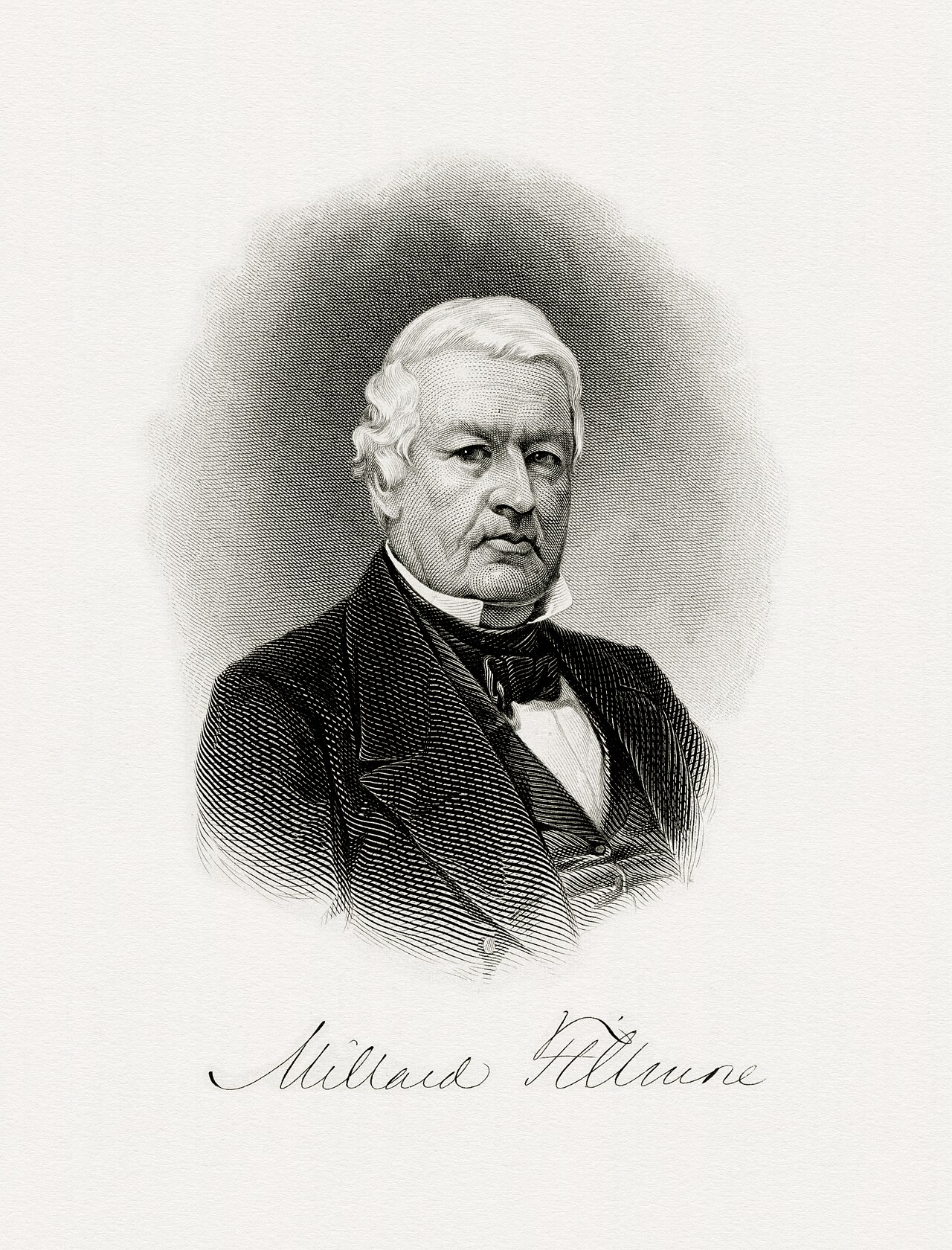
He had little formal schooling but studied to become a lawyer, becoming prominent in the Buffalo area as an attorney and politician. Seward. Throughout his career, Fillmore declared slavery evil but said it was beyond the federal government's power to end it.
Reader's Guide
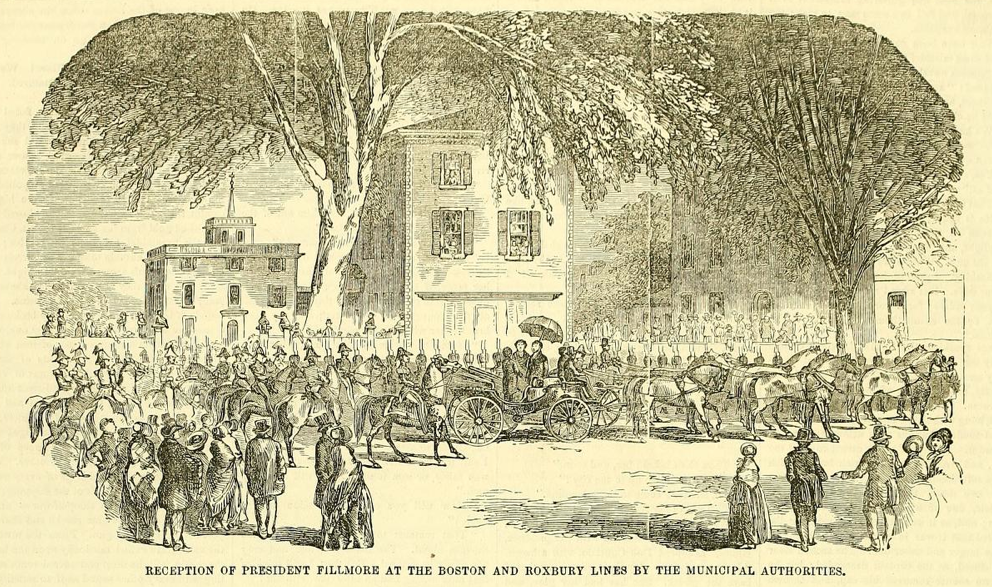
Fillmore's presidency was brief and consequential. In foreign policy, he supported U.S. Navy expeditions to open trade in Japan, opposed French designs on Hawaii, and was embarrassed by Narciso López's filibuster expeditions to Cuba. Historians usually rank Fillmore among the worst presidents, largely for his policies regarding slavery, as well as among the least memorable.
Did You Know?
- Fillmore was the last president to be a member of the Whig Party while in the White House.
- He was born into poverty in a log cabin in the Finger Lakes region of upstate New York.
- He supported U.S. Navy expeditions to open trade in Japan.
From Carpenter to Compelled Pirate
Phillips began his maritime life not as a rogue but as a skilled ship's carpenter, a trade that would later make him a target for pirate crews. In April 1721, while his vessel was en route from England to Newfoundland, it fell into the hands of Thomas Anstis's pirate band. Because artisans with practical skills were always in demand aboard such vessels, Phillips was compelled to stay and serve as carpenter under Anstis for roughly a year. He reportedly adapted quickly to the piratical existence. In April 1722, Anstis dispatched Phillips and a small party ashore on Tobago to careen a captured frigate. When a British warship appeared, Anstis abandoned his men and fled. Phillips evaded capture by hiding in the surrounding woods and eventually made his way back to Bristol, England, alongside other stranded shipmates, where they temporarily set aside their piratical lives.
Seizing the Revenge
Phillips' return to piracy was prompted partly by the arrest of former comrades in Bristol, which pushed him back toward Newfoundland and a plot to steal a vessel. On August 29, 1723, he and four companions—sailing master John Nutt, gunner James Sparks, carpenter Thomas Fern, and tailor William White—seized a schooner belonging to William Minott at Petty Harbour and renamed her Revenge. The small crew immediately drafted a set of governing articles, notably including a death penalty for rape, a stark contrast to the gang rape and murder committed under Anstis while Phillips had served aboard. Phillips sailed for the West Indies, capturing fishing vessels and absorbing new crew members, including a former Blackbeard man named John Rose Archer, who was elected quartermaster, and John Fillmore, whom they forced into service after capturing his sloop. The crew swelled to eleven. Months of fruitless hunting near Barbados left them starving before they finally took French and English prizes, then careened the Revenge at Tobago.
The Mutiny at Nova Scotia
Phillips' final capture near the Nova Scotia coast was a sloop under the command of Andrew Harradine, and it proved to be his undoing. Harradine, along with other prisoners who had been coerced into serving aboard the Revenge, plotted a mutiny aimed at killing the captain. On April 18, 1724, the conspirators—among them John Fillmore—launched a surprise assault on the ship's leadership, killing Phillips along with his sailing master, boatswain, and gunner in a single violent strike. The remaining pirates fared little better. John Rose Archer was briefly spared but was later hanged in Boston on June 2, 1724, alongside three fellow crewmen. Before their executions, the pirates delivered speeches that were widely reprinted; Archer attributed his descent to drinking and to the cruelty of merchant captains who drove desperate sailors toward piracy. In under eight months at the helm, Phillips had taken thirty-four ships, a remarkable tally for a man commanding barely a dozen men.
A Small Pirate's Enduring Footprint
By the standards of the Golden Age, Phillips was a minor figure. Where Bartholomew Roberts commanded hundreds of men and Blackbeard blockaded Charleston with a four-ship flotilla, Phillips died with only eleven souls aboard a small schooner. His scarcity of manpower meant he often coerced prisoners into signing his articles, broke promises of release, and executed or marooned those who tried to flee. Yet his legacy is disproportionately large for scholars of piracy. His complete set of articles survived because they were reprinted in Charles Johnson's General History of the Pyrates, and fewer than a dozen such codes exist in the historical record. Together with John Fillmore's first-person written account of life aboard the Revenge, Phillips' documents form some of the most valuable primary evidence we possess about daily existence on pirate vessels. He also illustrates a recurring pattern of the era: small, short-lived bands that splintered off from larger crews, their captains often rising through a chain of captures and defections that stretched back to Roberts and Anstis.
Gallery

Frequently Asked Questions
Who is Millard Fillmore?
Millard Fillmore was the 13th president of the United States, serving from 1850 to 1853. He is an American political figure whose tenure is often remembered for its role in the escalating national debate over slavery.
What political party did Millard Fillmore belong to?
He was a Whig, which makes him the final president to carry that party label while occupying the White House. He also holds the unique distinction of being the last U.S. president who was neither a Democrat nor a Republican.
How did Millard Fillmore become president?
He ascended to the presidency in July 1850 after President Zachary Taylor died in office. Fillmore then finished the remainder of Taylor's single term, stepping down in March 1853.
What is Millard Fillmost known for?
He is most frequently cited for signing the Compromise of 1850, a sweeping legislative package that attempted to ease sectional tensions over the expansion of slavery into new territories. That compromise ultimately failed to prevent the Civil War, coloring his legacy with controversy.
Why is Millard Fillmore significant in American political history?
His presidency marks the closing chapter of the Whig Party's era in the executive branch. Because no president after him belonged to a party outside the Democrat and Republican duopoly, he stands as a transitional figure between the old sectional party system and the modern two-party landscape.
More in American And Caribbean Leaders 1-21
Spotted an error? Know more?
This is a living reference — every entry is fact-audited, and reader corrections feed straight into our audit queue. Suggest an edit · See this site's audit record